Weekly schedule
Week 1
- Day 01 5x5 Workout A 3 exercises
-
Day 02 Rest Recovery day — light walk or stretching
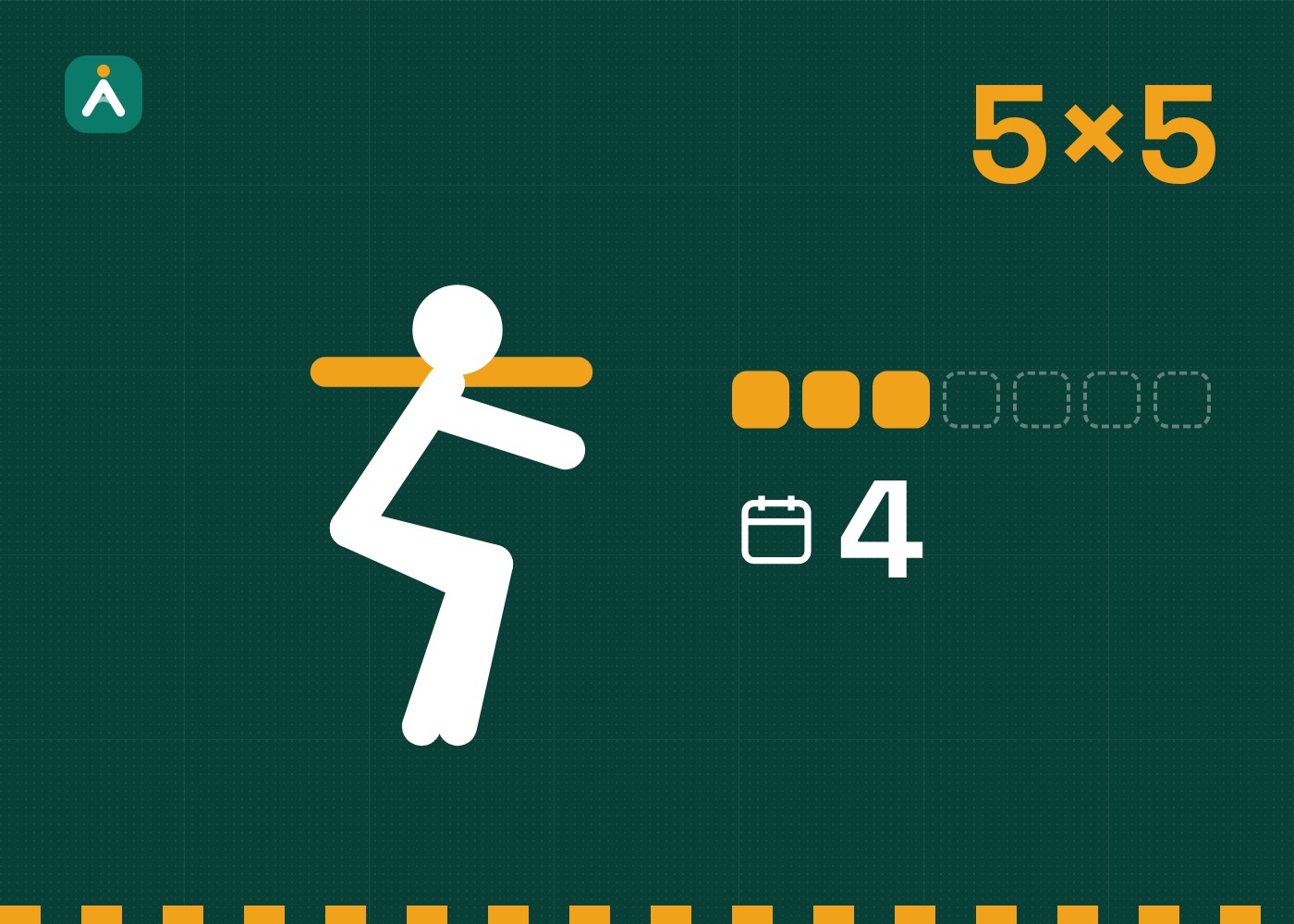
- Day 03 5x5 Workout B 3 exercises
-
Day 04 Rest Recovery day — light walk or stretching
- Day 05 5x5 Workout A 3 exercises
-
Day 06 Rest Recovery day — light walk or stretching
-
Day 07 Rest Recovery day — light walk or stretching
Week 2
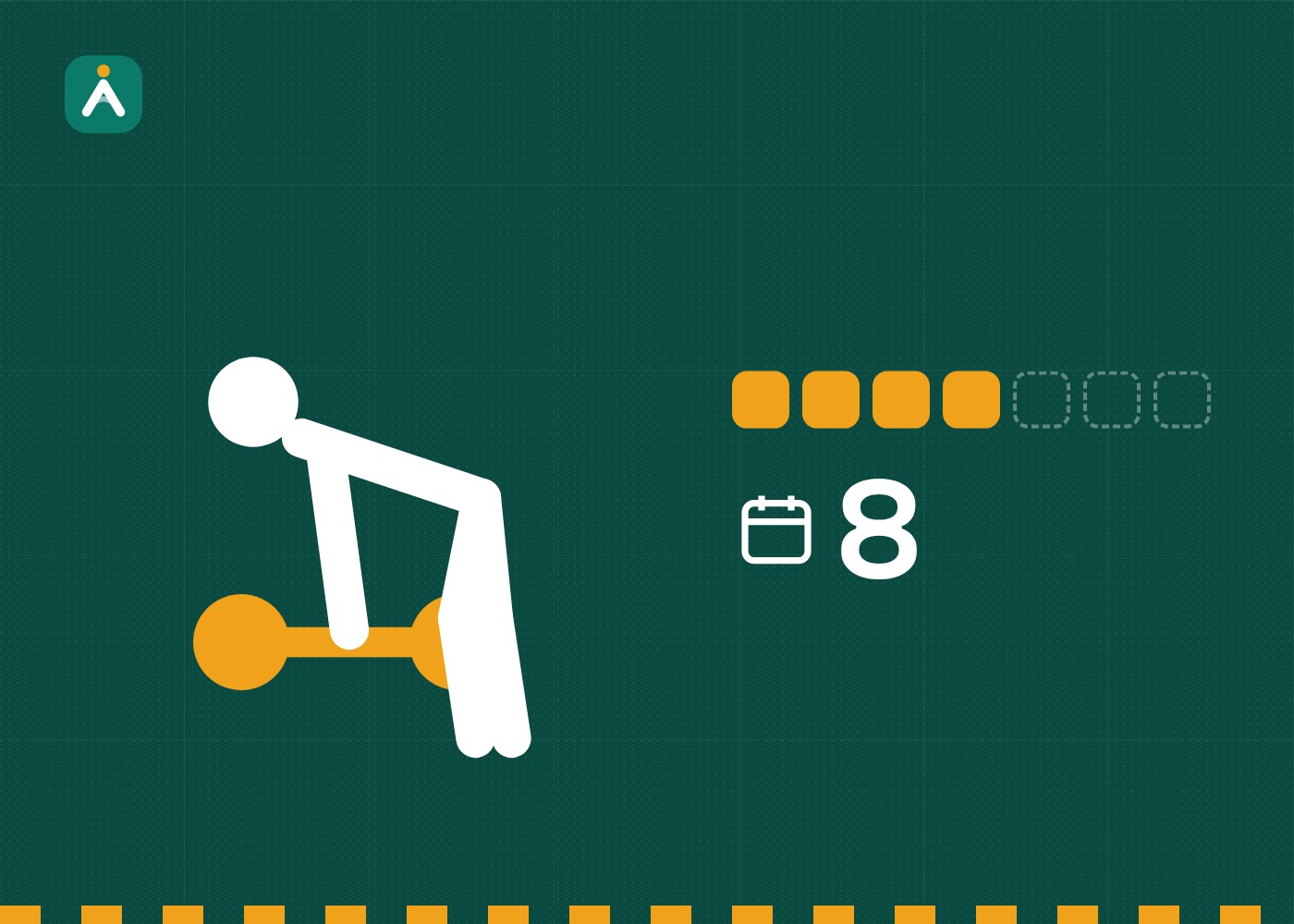
- Day 08 5x5 Workout B 3 exercises
-
Day 09 Rest Recovery day — light walk or stretching
- Day 10 5x5 Workout A 3 exercises
-
Day 11 Rest Recovery day — light walk or stretching
- Day 12 5x5 Workout B 3 exercises
-
Day 13 Rest Recovery day — light walk or stretching
-
Day 14 Rest Recovery day — light walk or stretching
Week 3
- Day 15 5x5 Workout A 3 exercises
-
Day 16 Rest Recovery day — light walk or stretching
- Day 17 5x5 Workout B 3 exercises
-
Day 18 Rest Recovery day — light walk or stretching
- Day 19 5x5 Workout A 3 exercises
-
Day 20 Rest Recovery day — light walk or stretching
-
Day 21 Rest Recovery day — light walk or stretching
Week 4
- Day 22 5x5 Workout B 3 exercises
-
Day 23 Rest Recovery day — light walk or stretching
- Day 24 5x5 Workout A 3 exercises
-
Day 25 Rest Recovery day — light walk or stretching
- Day 26 5x5 Workout B 3 exercises
-
Day 27 Rest Recovery day — light walk or stretching
-
Day 28 Rest Recovery day — light walk or stretching
Program overview
5×5 Workout Program
The 5×5 workout plan has several advantages for building overall size and performance in the gym. Because the rep count is low, you’ll use very heavy loads relative to your current strength and body size. This kind of training helps your nervous system learn to recruit each muscle fiber more fully, so you can generate more force with the same muscle fibers over time. The aim is to increase strength in compound lifts by adding weight each time you complete the workout.
For the best results, build your plan around a 1 repetition maximum (1RM). Calculate Your One Rep-Max (1RM) For 5 reps, you should be roughly able to lift 70-80% of your 1RM. Begin with light loads for the first 2 weeks — or use only the bar if you’re a beginner. After every 2-week cycle, add 2,5-5 kg to the squat and deadlift and 2,5-5 kg to upper body exercises. You’ll train only 3 times per week, because the rest days between sessions are essential for supporting muscle growth.
Before you start, perform warm-up exercises. The correct warmup approach is to begin with two sets of five using the empty bar. Then add 10-20kg/25-45lb and complete your next warmup set for 2-3 reps. If you want to build your own warm-up routine, keep in mind that fitnessprogramer.com offers many warm-up and stretching exercises.
Frequently Asked Questions about the 5x5 Workout:
What is a 5x5 workout?
A 5×5 workout is a strength training plan in which you complete 5 sets of 5 repetitions for each exercise. It centers on compound movements such as squats, deadlifts, bench presses, overhead presses, and rows to develop total strength and muscle mass.
Who is the 5x5 workout suitable for?
The 5×5 workout works for people at many fitness levels, from beginners to advanced lifters. It is especially useful for anyone aiming to gain strength, improve muscle mass, and build better overall athleticism.
What are the main benefits of a 5x5 workout?
The main benefits are greater strength, more muscle mass, and improved overall fitness. The program is also simple to follow, and its emphasis on compound movements supports efficient muscle development.
How often should I do a 5x5 workout?
You will typically do a 5×5 workout three times per week on non-consecutive days, which allows proper rest and recovery between sessions. This schedule gives enough stimulus for strength gains without creating a high risk of overtraining.
Can I customize the 5x5 workout program?
Yes, you can adapt the 5×5 workout to match your goals and preferences. You may change the load, use exercise variations, or include accessory exercises to address specific muscle groups or weak points.
How do I progress in a 5x5 workout program?
Progress in the 5×5 workout usually comes from gradually increasing the weight over time as you become stronger. Try to add weight to the bar in small jumps, such as 2.5 to 5 pounds, whenever you can finish all sets and reps with good form.
What should I do if I plateau on a 5x5 workout?
If you stall on a 5×5 workout, you can use strategies such as deloading, changing rep ranges, or swapping exercises to break through the plateau. Good nutrition, rest, and recovery are also crucial for ongoing progress.
Is the 5x5 workout suitable for fat loss?
Although the 5×5 workout mainly targets strength and muscle gain, it can support fat loss indirectly by raising metabolism and encouraging muscle growth, which helps you burn more calories even at rest.
How long does a 5x5 workout session typically last?
A 5×5 workout session generally takes about 45 minutes to an hour, including warm-up sets, the main lifts, and any extra accessory exercises or stretching.
Can I combine the 5x5 workout with other forms of exercise?
While the 5×5 workout can serve as the foundation of your strength training routine, you can also pair it with other exercise types such as cardiovascular training, flexibility work, or sport-specific training depending on your overall fitness goals. Just make sure you recover well and avoid overtraining.
Are there any risks associated with the 5x5 workout?
As with any strength training program, injury risk exists if you do not keep proper form or if you advance too fast with heavy weights. Start with light weights, emphasize technique, and increase intensity gradually to help reduce the risk of injury.