
What is whey protein?
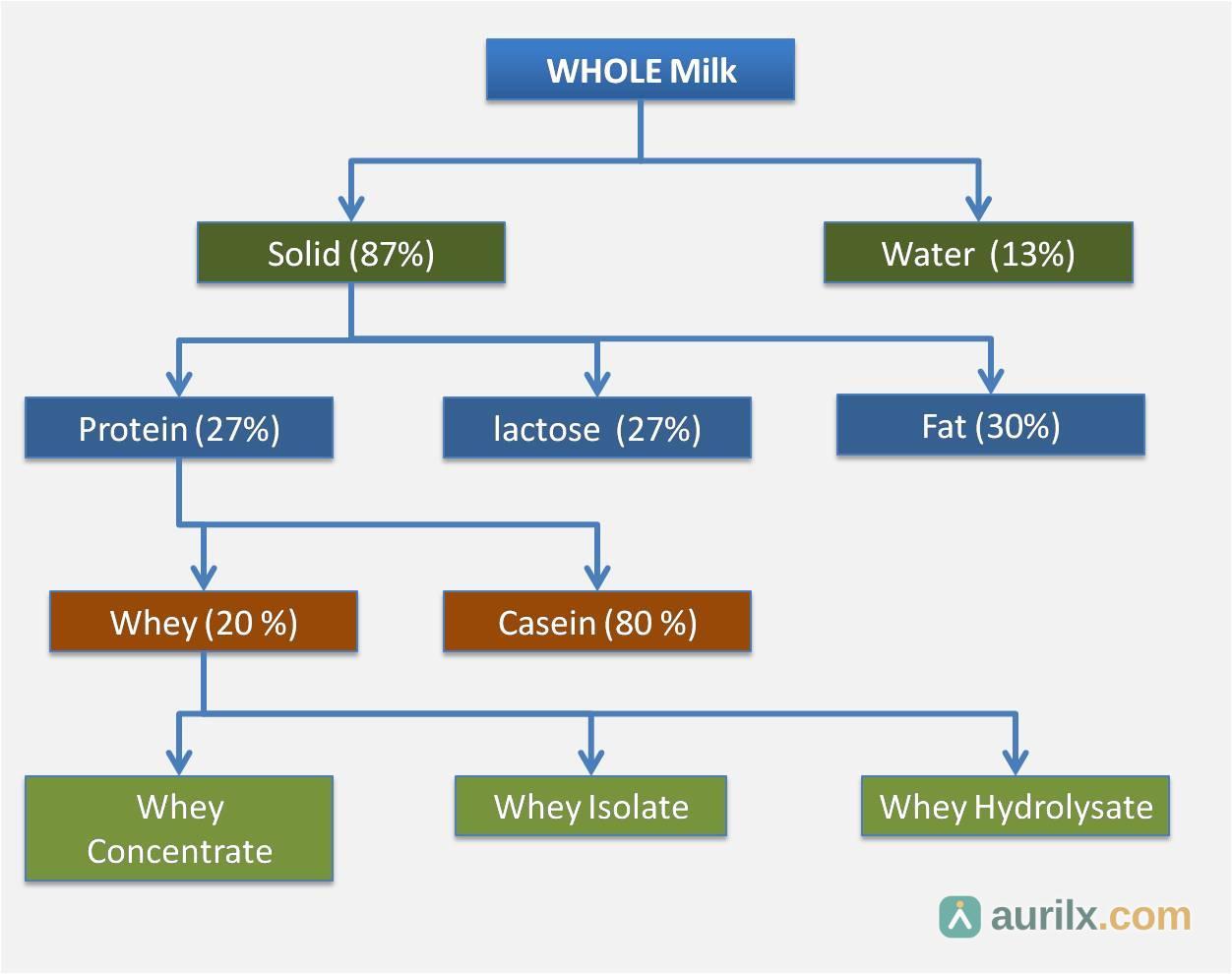
Cow’s milk contains two primary proteins: casein, which accounts for about 80% of milk protein, and whey, which makes up the other 20%. When milk products like cheese are made, the curdling process separates whey from casein. In the past, the whey was discarded as waste. Today, whey is a highly sought-after ingredient and serves as the main component in many meal replacement and protein products.
WHY IS WHEY PROTEIN SO POPULAR AMONG ATHLETES ?
People choose whey protein benefits for 3 main reasons;
- Whey is a complete, quality protein, with high net utilisation and little waste
- Whey contains the highest natural source of branched chain amino acids
- Whey is a fast acting protein
These are explained in more detail below.
Protein quality is judged by how closely the amino acid ratio in a food matches human needs, and by how well the body digests and uses that protein. Whey is a high quality, complete protein, so the body digests and absorbs it easily, with little protein wasted. Because the essential amino acid profile of whey is similar to that of the human body, dietary whey has a high conversion rate into structural components within the body.
Among natural protein sources, whey provides the highest amount of branched chain amino acids: leucine, isoleucine and valine. Branched chain amino acids are essential amino acids used directly in muscle building and repair, so proteins rich in them usually have the greatest effect on muscle growth.
Whey is also a fast acting protein, meaning it enters the bloodstream quickly. It is widely believed that a whey-containing protein shake taken soon after training can accelerate muscle recovery by making essential and branched chain amino acids quickly available to your muscles.
How to Choose a Whey Protein Product?
Do not be misled into thinking the product with the highest protein content is automatically the best. The amino acid profile, which is the composition of the whey protein, determines biological value, not protein quantity alone. This will be discussed in more detail in the future. For now, you only need to understand the following generalisation
What is protein quality?
To understand protein quality, you first need a basic nutrition foundation. Protein is built from amino acids, which are its building blocks. There are 20 different amino acids in the body. 9 are considered essential and must come from your diet. The other 11 are non-essential because the body can make them, as long as your diet is otherwise adequate.
The table below summarises the essential and non-essential amino acids. Do not worry; unless you study biochemistry, you will not need to memorise them. They are included because they are important for understanding protein quality.
| Essential Amino Acids | Non-Essential Amino Acids |
| hisitide* | alanine |
| isoleucine | arginine |
| leucine | asparagine |
| lysine | aspartic acid |
| methionine | cysteine |
| phenylalanine | glutamic acid |
| threonine | glutamine |
| tryptophan | glycine |
| valine | proline |
| serine | |
| tyrosine |
* Histidine is now listed as an essential amino acid as it is evidently required in childhood, even though its role in adulthood is less clear.
You can get all amino acids, both essential and non-essential, from a good diet. Even so, the essential amino acids are what determine a food’s protein quality.
Protein Quality of Food
There are 2 factors which determine the protein quality of a food:
- How closely the essential amino acid content matches the human body’s requirement
- How easily the protein is digested and absorbed into the body for utilisation
In summary, protein quality depends on how closely the ratio of essential amino acids in a food matches human needs and how easily the protein is digested and used within the body.
There are a number of the methods of determining the protein quality of food. These methods work by either comparing the amino acid content of the food with the human requirement (through chemical estimation) or by measuring the amount of protein absorbed and retained by the body (Net Protein Utilisation).
The table below summarises the protein quality score of common foods using Net Protein Utilisation (NPU). The NPU is determined by measuring the amount of protein in a food and then accounting for any loses (in urine and faeces) after ingestion. The percentage of protein that is retained within the body is the NPU value. In summary, the higher the score the more effectively the protein will be absorbed and retained (and in theory utilised) within the body.
| Food Protein Source | NPU Value |
| Human Milk | 94 |
| Whole Egg | 87 |
| Cow’s Milk | 81 |
| Soy Beans | 67 |
| Rice | 63 |
| Wheat | 49 |
| Maize (corn) | 36 |
As the table shows, human breast milk has the highest protein quality, with 94% utilisation, which makes sense given its role in infant growth and development. This also helps explain why eggs and cow’s milk are high in protein quality, since these foods also provide young animals with the nutrition needed for early growth and development.
As the table above shows, human breast milk has the highest protein quality at 94% utilisation. That fits its role in infant growth and development. It also helps explain why eggs and cow’s milk rank highly for protein quality. They, too, supply young animals with the nutrition needed for early growth and development.
Many protein powders use milk proteins like whey protein and casein, or egg protein, as the main ingredient. These proteins are high quality and the body can use them easily to build muscle. To compare the protein quality of supplements with real foods, a measure called biological value is used.
Biological Value of Protein
Biological Value (BV) is the protein quality measure most often used in the bodybuilding industry. You can measure BV with either method described above: chemical estimate or Net Protein Utilisation. The NPU method is the gold standard for measuring protein retention. In an ideal world, every food and food product would use this method to determine its true protein Biological Value. But because it is expensive and invasive, the food supplement industry rarely uses it.
True Biological Value is shown as a percentage and uses the Net Protein Utilisation method to work out how much protein the body retains. In theory, a true BV (or NPU) cannot be higher than 100%.
The other, more common and less expensive way to determine BV is the chemical estimate method. This method makes it easy to compare the protein quality of supplements with whole foods. Since eggs have the highest NPU value of any freely available food, as shown in the table above, you can compare a food’s amino acid profile with eggs to calculate a chemical estimate of relative Biological Value.
With the relative BV method, eggs are set at BV = 100. Compare a test food’s amino acid profile with eggs, and you can determine a relative BV.
In theory, a true BV value cannot be greater than 100%, but a relative BV can exceed 100. Whey protein is the best example. In its most natural form, whey protein concentrate has a relative BV of 104. Some of the more desirable whey protein isolate products can reach a relative BV of up to 159.
In summary, whey protein supplements often have a true biological value of almost 100%, which makes them among the most complete and desirable protein sources on the market. This comes from isolating the essential amino acids in whey protein, which comes from cow’s milk, and removing unwanted properties to support higher use in the body.
Types of whey protein
There are currently 3 different kinds of whey protein powder on the market: concentrate, isolate and hydrolysate.
Whey Protein Concentrate (WPC) – the cheapest, most natural and most complete form of whey protein. It contains the highest percentage of fat and carbohydrate (lactose), so it digests more slowly and has a greater chance of gastric upset and bloating. Recommended for – beginner to moderate athletes and those trying to gain weight who do not have trouble digesting dairy products.
Whey Protein Isolate (WPI) – has a higher percentage of protein per serve, with less fat and carbohydrate. It has the highest biological value (conversion of protein in the body) and the best overall effect on muscle growth. It costs more than WPC but less than HWP. Recommended for – moderate to advanced athletes (the majority of gym users) who want to focus on muscle growth and recovery, not weight gain, and/or those who are somewhat prone to dairy-related symptoms, such as bloating and gastric upset.
Hydrolysed Whey Protein (HWP) – high in protein, absorbed the fastest, and able to support quicker muscle recovery, which is especially desirable for heavy trainers, with the lowest chance of side effects. It is the most expensive. Recommended for – advanced athletes with high training volumes who need faster recovery. It is also ideal for those who are very susceptible to dairy-related symptoms, such as lactose intolerance.
Learn About Whey Protein Concentrate (WPC)
Whey Protein Concentrate, or WPC, is the base product in the whey protein range. In this article, we will cover the advantages and drawbacks of using WPC as a protein supplement, plus what to look for when choosing the best protein product for your needs.
What is Whey Protein Concentrate?
Whey Protein Concentrate is basically a dehydrated by-product, once considered a waste product, from cheese manufacturing. During cheese production, milk’s casein and whey proteins are separated. Remove the water, and you are left with WPC.
Defining Whey “Concentrate”
WPC products provide whey protein in its most natural form, but they do not contain the highest amount of whey protein per serve, despite the name. Don’t be misled by the label: in whey protein, “concentrate” refers to the raw form, not the protein amount.
Using WPC for Weight Gain and Muscle Growth vs Weight Loss
As a concentrate, whey protein is a moderate-release protein. It is digested and usually absorbed within 2 hours of consumption, gradually supplying protein during that time. One benefit of whey protein concentrate is that it is very satiating, which helps curb hunger and extend fullness. Products with WPC can contain up to 85% fewer calories than a typical meal and still help satisfy hunger, which is especially useful for people trying to lose weight.
If weight loss is the goal, WPC products are usually used to replace a meal (ie breakfast, lunch or dinner) so you feel full without taking in too many calories.
For those trying to gain weight, WPC is also very useful, but here it is used as a meal supplement to add protein and quality calories to your diet. Three balanced meals (breakfast, lunch and dinner), supplemented with a whey protein product mid morning and again mid afternoon, is generally enough to support weight gain or muscle growth (please refer to any product specific label to achieve best results).
Benefits of Whey Protein Concentrate
One major advantage of whey protein concentrate is that, in its natural state, WPC provides a complete protein with the amino acid profile intact. Other whey forms, Whey Protein Isolate (WPI) and Hydrolysed Whey Protein (HWP), can deliver more protein per serve and may be easier to digest and absorb, but the refining process can cause some amino acids to be lost or altered.
WPC also has a clear price advantage. Because it needs very little processing or modification, WPC products are the least expensive option on the market, giving you quality whey protein at the lowest cost.
Disadvantages and Side Effects of Whey protein Concentrate
The biggest drawback is that WPC contains a fair amount of lactose (milk sugar), which can trigger stomach upset and gastro-intestinal discomfort in some, though not all, people. For that reason, WPC products are generally not advised for people with lactose intolerance.
However, a common myth is that anyone who feels gastro-intestinal discomfort soon after drinking WPC must be lactose intolerant. The lactose in WPC can worsen symptoms in people with lactose intolerance, but the side effects most often reported by WPC users usually come from drinking the whole protein shake too fast, especially right after a workout, and/or from not giving your body time to adapt to a new food product.
To reduce the bowel discomfort often linked with WPC, drink your protein shakes like a cup of coffee, slowly over 20 minutes, not like a tequila shot. That should ease most stomach upsets. It also helps to let the bacteria in your bowel adjust to the new food. Begin on day 1 with a small dose, ie quarter of recommended, then increase gradually over a few days, ie quarter-dose, half-dose, full dose, twice daily etc.
If you have concerns about WPC or have had gastro-intestinal troubles with Whey Protein Concentrate before, changing to a quality Whey Protein Isolate (WPI), Hydrolysed Whey Protein or a Whey Protein Blend should help solve most gastrointestinal problems and provide extra whey protein benefits, which are covered in the relevant articles at the bottom of this page. Of course, the downside is that you will pay more.
Another WPC trade-off is its slower absorption rate. WPC is a moderate release protein, so when you use it alongside a proper balanced diet it can help keep a steady supply of protein available through the day. More recently, though, the market has shown greater demand for fast release whey protein products, eg HWP and HWPI, which are made to deliver a strong protein dose quickly to meet the rising demand for blood proteins immediately post workout.
In an ideal world, athletes would eat a well balanced diet with either WPC or WPI throughout the day so their body stays in positive nitrogen balance, ie there is always a supply of protein in the blood ready for when the body needs it, and also take a fast acting Hydrolysed Whey Protein Isolate (HWPI) immediately post-workout, absorbed within 20mins, to help meet any increase in protein demand. But this approach is expensive, so you need a plan that fits both your training goals and your budget.
Choosing a Whey Protein Concentrate Product
If you want quality, products sold as Whey Protein Concentrate should usually be above the 75% protein mark. That said, weight and mass gain products often contain as little as 40% protein, with the rest of the serve made up of carbohydrates and fats.
Many people are put off by the high carbohydrate content in weight gain formulas, but these products are designed to help you gain weight, not to make you look shredded and cut. When you are trying to gain weight, protein on its own usually has limited effects because you need both quality protein and carbohydrate to promote insulin secretion and muscle growth. Most research suggests that protein without enough carbohydrate intake will have limited growth effects. Also, the serving size of weight gain formulas is usually much larger, so although you may only be getting 30% protein, ie 30g of protein per 100g serving, more than about 30g of protein in one serve is most likely wasted anyway.
The best approach when buying any protein powder is to be clear about your training goals. Once you know your goals, you can decide which product is best suited to help you reach them, as well as what kind of training you should be doing.
To sum up, know your goals and do not focus only on the overall protein percentage, protein serve per 100g, when choosing a product. Also consider the amount of protein per serve. Good WPC products should provide at least 25g per serve.
As a general rule, most WPC products are very similar. Price differences usually come from branding costs and added, often over-hyped, ingredients. Some WPC brands add ingredients to make the product seem more appealing and sexy, but these products usually do little more than the basic formulas. Added ingredients matter more with WPI and HWPI products, which are covered in the relevant articles below.
One sign of a poor-quality whey product is that it does not mix well in water and leaves you feeling bloated. Unfortunately, you usually only discover that after buying it. Some stores do offer sample packs or let you try products first. Asking other gym users about their experiences can also help.
Keep in mind that the product with the most protein is not automatically the best. The amino acid profile, the makeup of the whey protein, determines biological value, not protein amount alone.
Learn about Whey Protein Isolate (WPI)
Whey protein isolate, also known as WPI, is the most popular whey protein product sold in the gym supplement market today. It provides a high percentage of whey protein per serve, and it greatly reduces the risk of side effects, mainly bloating, that are often linked with the more natural whey protein concentrate (WPC).
In this article, we cover the advantages and drawbacks of WPI as a protein supplement, plus the key points to consider when choosing the best product for your needs.
What is Whey Protein Isolate?
As the diagram below shows, dairy milk proteins are first split into casein and whey, and whey protein concentrate becomes the base for all whey protein products. Whey protein isolate is then produced by filtering WPC to remove lactose (milk sugar) and fat, creating a more refined, designer whey product.
Which WHEY PROTEIN ISOLATE Filtration Method is best?
Two filtration methods are used to refine WPI: ion exchange and cross-flow filtration. Both have benefits and limitations, and price usually reflects that.
Ion exchange filtration is a chemical process. Chemicals break the whey protein solution down into individual molecules, which are then separated by electrical charge. The benefit is that this method usually produces WPI with the lowest fat and lactose content and the highest protein percentage. The downside is that several amino acids in the whey protein are also broken down during ion exchange filtration, which lowers their biological value, meaning their ability to be used by the body to make protein and build muscle.
In short, ion exchange whey protein isolate products contain a higher percentage of whey protein, but some amino acids are degraded, so the biological value is lower. Put simply, you get a higher protein percentage in a form that is slightly less useful to the body.
Cross-flow filtration is a chemical-free process that uses a semi-permeable membrane to filter a whey protein solution according to molecule size. WPI products can pass through several levels of cross-filtration to isolate whey protein molecules from unwanted ingredients such as fat and lactose. These include microfiltration, ultrafiltration and nanofiltration. What’s the difference? It comes down to the pore size of the semi-permeable membrane and, in turn, the size of the molecules that can pass through it.
Microfiltration is the most basic form of whey protein isolate filtration and is also the cheapest. Products that go through microfiltration will still contain a small percentage of carbohydrate and fat.
Ultrafiltration is the next step up in filtration. The molecules that are small enough to pass through the membranes of microfiltration (above), may be too big in ultrafiltraion, which helps to produce a more refined product with less lactose and fat.
Nanofiltration is the most refined process allowing only the smallest of molecules (less than 1 nanometer) to pass through the filter. This type of filtration method can also be used to help separate individual amino acids to create a whey protein isolate product with a more desirable amino acid profile. Essentially this creates a higher biological value and a better conversation rate within the body. It’s also the most expensive.
From a practical product review perspective, the smaller the pore size used in the filtration process, the more refined the end product and additionally the more expensive the product will cost. For example products that undergo nanofiltration are more expensive that those that undergo ultrafiltration or microfiltration.
The main advantage of cross-flow filtration over ion exchange filtration is that the amino acids that make up whey protein are preserved in their natural form with the highest biological value resulting in a product with a high conversion to muscle mass. The disadvantage is that they will generally be accompanied by a slightly higher percentage of fat and lactose (although in the whole scheme of things this is normally is a negligible amount).
Overall whey protein isolate products have the highest biological value of all whey protein products, meaning that they produce the highest conversion into the making of structural body proteins and muscle mass. The type and the degree of filtration will ultimately determine the biological value of the product which is then normally reflected in the price.
Benefits of Whey Protein Isolate (WPI)
There are several reasons why people choose to pay more and invest in WPI instead of the less expensive WPC products.
The biggest benefit of WPI products is that they provide a solid serving of whey protein without the accompanying carbohydrates or fat, making them especially useful for people who want to build or maintain lean muscle mass without adding unwanted fat or body weight.
Whey protein isolate products have the highest biological value of all proteins on the market, maximizing the efficiency in which the protein is converted within the body and reducing the amount of waste.
Additionally most WPI products are around 90% protein, delivering around 27g of protein per 30g serve. Most research suggests that we need to be aiming for at least 25g of protein per meal (particularly after a workout) to have the most anabolic (muscle growth) effect.
During the filtration process of WPI products the majority of carbohydrate has been removed, reducing the amount of lactose (normally to less than 1%) and hence reducing the risk of associated lactose related side effects (such as gastric upset), which are occasionally reported among WPC users, in particular those with those with lactose intolerance. Whilst WPI products are generally considered safer for people who experience gastric upset with whey protein related products, Hydrolysed Whey Protein Isolate (HWPI) products are most easily digested and therefore are the best option for people who experience gastric related symptoms.
Disadvantages and potential side effects of Whey Protein Isolate (WPI)
Even after lactose has been removed, some people may still experience gastric upset with WPI products because of the long-chain nature of some amino acids, which are also found in WPC and need intense digestion. That is why Hydrolysed Whey Protein Isolate (HWPI) products were developed, to help slow this digestion process and lower the risk. In HWPI, enzymes pre-digest the long-chain amino acids during hydrolysis, making the final product much easier for the human body to digest and significantly reducing the risk of side effects.
Because WPI and HWPI products require refinement, production costs go up, and that raises the price you pay. Even so, most WPI and HWPI products provide quality protein for less than $3 per serve, which is still cheaper and more convenient than preparing a meal of lean meat and eggs.
Our best advice is simple: once you know you are committed to training and you have found a product you like, buy in bulk (3kg or more). It is much cheaper over time.
To spot a lower-quality whey product, look for one that does not mix well with water and leaves you feeling bloated. The bad news is that you often only discover this after buying it. Some stores, however, offer sample packs or let you try the product first. You can also ask other gym users about their experiences.
Do not get pulled in by the product with the highest protein count and assume it is the best. The amino acid profile, which is the makeup of the whey protein, determines the biological value, not just the amount of protein.
Learn About Hydrolysed Whey Protein (HWP)
Hydrolysed Whey Protein, also called HWP, is a highly desirable whey protein that the body absorbs quickly and easily, making it an ideal pre or post workout protein supplement. While HWP offers a number of benefits, it also has several limitations. In this article, we will cover the pros and cons of using HWP as a protein supplement, explain the differences between HWPI and HWPC, and show you what to look for when choosing the best protein product for your needs.
What is Hydrolysed Whey Protein (HWP)?
Hydrolysed Whey Protein is made through hydrolysis, a process in which enzymes pre-digest the amino acids, mainly the long-chain amino acids that make up whey protein. This breaks them down so the final product enters the bloodstream much faster. The pre-digested product is also much safer for human consumption, with a significant reduction in the risk of gastrointestinal side effects.
What’s the difference between HWPI and HWPC?
There are 2 types of HWP: hydrolysed whey protein concentrate (HWPC) and hydrolysed whey protein isolate (HWPI). The difference comes from the point of hydrolysation. To make HWPC, you only need to hydrolyze the WPC. To make HWPI, you must isolate the whey protein first and then hydrolyze it.
Hydrolysed whey protein concentrate (HWPC) vs Hydrolysed whey protein isolate (HWPI ) – Which is Better?
If we compare apples with apples and the hydrolysis process used for both is identical (ie using the same enzymes, in the same environmental conditions, for the same amount time), then comparing HWPI with HWPC is the same as comparing Whey Protein Concentrate with Whey Protein Isolate. For athletes who want a fast acting Whey Protein for pre or post workout use, HWPI is the better choice, because isolates are traditionally digested faster and contain more protein per serve. Hydrolysed Whey Protein Isolates also have lower amounts of lactose and fat than Hydrolysed Whey Protein Concentrates. Unfortunately, hydrolysation leaves a bitter taste in your mouth, so HWPC products tend to taste better then HWPI because they contain a higher percentage of fat and sugar. Although hydrolysed whey concentrates may taste better, the fat content slows absorption, so it takes longer for the amino acids to enter the bloodstream.
Which is better? That depends on what you are taking it for. Since most people use hydrolysed whey protein products for fast acting protein, HWPI is generally the better option. Fortunately, most HWPI products on the market today use modern food technology to improve taste, although they may contain artificial sweeteners as a result. Once upon a time, drinking HWPI meant holding your nose. It was awful!
Although Hydrolysed whey protein isolate products are usually the most desirable option, they are also the most expensive products on the market. Depending on your training goals, that extra cost is sometimes unnecessary, so you should weigh the pros and cons of hydrolysed whey protein below before jumping to conclusions.
TIP: don’t mix HWPI with anything other than water. Mixing pure HWP products with milk, for example, will slow down the absorption process and defeat the point of taking it in the first place.
Advantages of Hydrolysed Whey Protein
One of the main advantages of HWP over the more natural WPC and WPI is that it is safer for human consumption. A commonly reported side effect of ingesting whey protein is that, in some people, it can cause gastric discomfort, constipation, cramping or bloating.
One reason people often experience these symptoms is that the digestive system has to work hard to break down the many long-chain amino acids that make up whey protein. Hydrolysed whey protein is already pre-digested by enzymes, so it is much easier on the digestive system. HWP is also absorbed much faster, with some products absorbed within 20mins of consumption. By comparison, the more natural WPC can take up to 3-4 hours to fully digest.
Another cause of gastric upset is the strong dose of lactose associated with whey protein products, since they come from dairy milk. To address this, whey protein isolate products were created to provide a higher percentage of protein and a smaller percentage of lactose. Hydrolysed whey protein Isolate goes one step further by breaking down the long chain amino acids, making it even easier on the stomach.
Because HWP is the easiest form of whey protein to digest and is the least likely to cause side affects, HWP (and in particular HWPI) is the most common form of whey protein used in baby formula and medicinal protein products.
Hydrolysed whey protein shakes consumed in the gym, trend or friend?
The main reason Hydrolysed whey protein products are popular with athletes in the gym is that they usually provide a strong dose of protein that is absorbed quickly into the blood stream, making them an ideal pre/intra/post workout protein supplement.
A recent study conducted in Australia (2008) found that Hydrolysed Whey Protein was more effective in muscle recovery immediately post workout than other whey protein products, which arguably makes them more desirable.
To sum up, the main appeal of HWP products is that they provide the fastest-acting form of whey protein, and they tend to produce the best results when you take them immediately post workout. Outside that window, the case for HWP is much weaker, and we cover that in more detail below.
Limitations and Disadvantages of Hydrolysed Whey Protein
At this point, you might be thinking that HWPI is the top option on the market and the only one worth considering. That is not the case. HWP products do offer clear benefits, especially when you use them immediately post workout, as noted above. But they also come with several drawbacks, and this is where a smart choice can save you a lot of money.
The first drawback is price. These products usually cost twice as much as whey protein concentrate, and that higher price is easy to explain because they need extra processing to make. The real question is whether the added cost is worth it.
The key benefit of HWP products is speed. To achieve that, the long-chain amino acids must be broken down through hydrolysation. The issue is that this process reduces some of their biological value, which makes them less useful to the body, especially when your goal is muscle building. So while HWP products can deliver protein quickly, you give up some biological value in return, which is less desirable for building muscle.
That does not mean you should avoid HWP. Use it for the job it was made for: a post workout protein hit. The most important point to remember is this, and it can help you save money. Pure HWPI, which is the expensive option, is really only useful when you take it just before, during or after a workout. If you take pure HWPI at any other time of day, meaning more than 3 hours before or after training, your money may be better spent elsewhere. Yes, you are still getting protein, but at other times you would be better off using a cheaper, higher-quality protein with greater biological value, such as Whey Protein Isolate, so you have enough long chain amino acids needed for muscle building.
In a perfect setup, serious athletes would use a quality HWPI immediately post workout for a quick protein boost, alongside a quality Whey Protein Isolate (WPI), Whey Protein Concentrate (WPC) or a whey protein blend (WPI + WPC) several times across the day to make sure they get enough of all the amino acids needed for strength and muscle mass gains. Another option is to buy a whey protein blend that provides both.
One major error made by uninformed, or misinformed, athletes is spending big money on 100% pure HWPI and drinking it during or after training, then assuming that is enough. If you read the article on post workout nutrition you will learn that carbohydrate, not protein, is the most important nutrient immediately post workout. So if you only consume protein immediately post workout and ignore the glycogen window, you are wasting your money.
Our best nutrition advice for athletes is to get your basic nutrient timing right before you invest in top shelf protein products. Also, when you use HWP products, they work best when combined with a more complete protein such as WPI or WPC throughout the day, as explained above. Used on their own, they usually do not produce the best results.
What is the Degree of Hydrolysis (DH)?
To understand hydrolysis, you first need to know that whey protein consists of short, medium and long chain amino acids held together by peptide bonds. In hydrolysis, specific enzymes are added to isolate and break those peptide bonds. Different enzymes and processing conditions can produce different amino acid sequences. That amino acid profile then determines the nutritional and functional properties of the hydrolysed whey protein product.
The degree of hydrolysis (DH) shows how much of the protein has already been pre-digested. A DH value of 10% means that 10% of all available peptide bonds have been hydrolysed (pre-digested). To make matters more confusing, the DH value sometimes refers to how many amino acids have partially broken down. For example, 100% pure hydrolysed whey protein isolate does not mean the formula has been completely broken down, because if it were, it would be worthless. Instead, it means the product contains only hydrolysed whey protein isolate and no traces of WPC or unhydrolysed WPI.
From our experience, the main thing is not to read too much into the degree of hydrolysis. Your time is usually better spent adjusting your training program to maximize results, rather than doing an exercise just for the sake of it. Every rep and set has a purpose, and only when you take that approach can you optimize your returns.
One last point on the degree of hydrolysis: among all whey protein formulas, 100% pure hydrolysed whey protein isolate is absorbed the fastest, but it is also the most expensive and the most bitter tasting. For the general population, beginner and intermediate athletes, that extra cost is most likely not justified. Using WPI will save you money and often produce better results. For advanced athletes who are committed to HWP, we recommend 100% pure HWPI. You will pay more for it, but if your diet and workout are fully optimized, you will notice the difference.
What’s the best protein powder (for you)?
There is no single magic solution that works for everyone. It depends on your current diet, physic and training goals. To get the best results, you need to match the choice to your specific needs.
- Whey protein concentrate (WPC)
- Hydrolysed whey protein (HWP and HWPI)
- Whey protein isolate (WPI)
- Whey protein blends (WPC + WPI or WPC + HWPI)
Products labeled as Whey Protein Concentrate should usually be above the 75% protein mark if quality is your goal. That said, weight and mass gain products often contain as little as 40% protein, with the rest of the serving made up of carbohydrates and fats.
Many people are put off weight gain formulas because they contain a high amount of carbohydrate per serve. But these products are made to help you gain weight, not to help you look shredded and cut. When you want to add weight, protein on its own usually has limited impact. You need a mix of quality protein and carbohydrate to stimulate insulin secretion and support muscle growth. Most research shows that protein without enough carbohydrate intake has limited growth effects. Also, weight gain formulas usually have a much larger serving size. While you may only be getting 30% protein (ie 30g of protein per 100g serving), more than about 30g of protein in one serve is most likely wasted anyway.
Our best advice when you want to buy any type of protein powder is to be clear about your training goals. Once you know your goals, you can decide which product is best to help you reach them, along with what kind of training you should be doing.
To sum up, know your goals and do not focus only on the overall percentage of protein (protein serve per 100g) when selecting a product. Also look at the amount of protein per serve. Good WPC products should provide at least 25g per serve.
As a general rule, most WPC products are very similar. Any price differences usually come from branding costs and added ingredients that are often over-hyped. Some WPC brands include certain ingredients to make them seem more appealing and sexy, but these products usually do little more than the basic formulas. The added ingredients matter more with WPI and HWPI products, which are covered in the relevant articles above.
One sign of lower-quality whey products is that they usually do not blend well in water and can leave you feeling bloated. Unfortunately, you often will not discover this until after you have bought the product. Some stores do offer sample packs or allow you to try them first. You can also ask other gym users about their experiences.