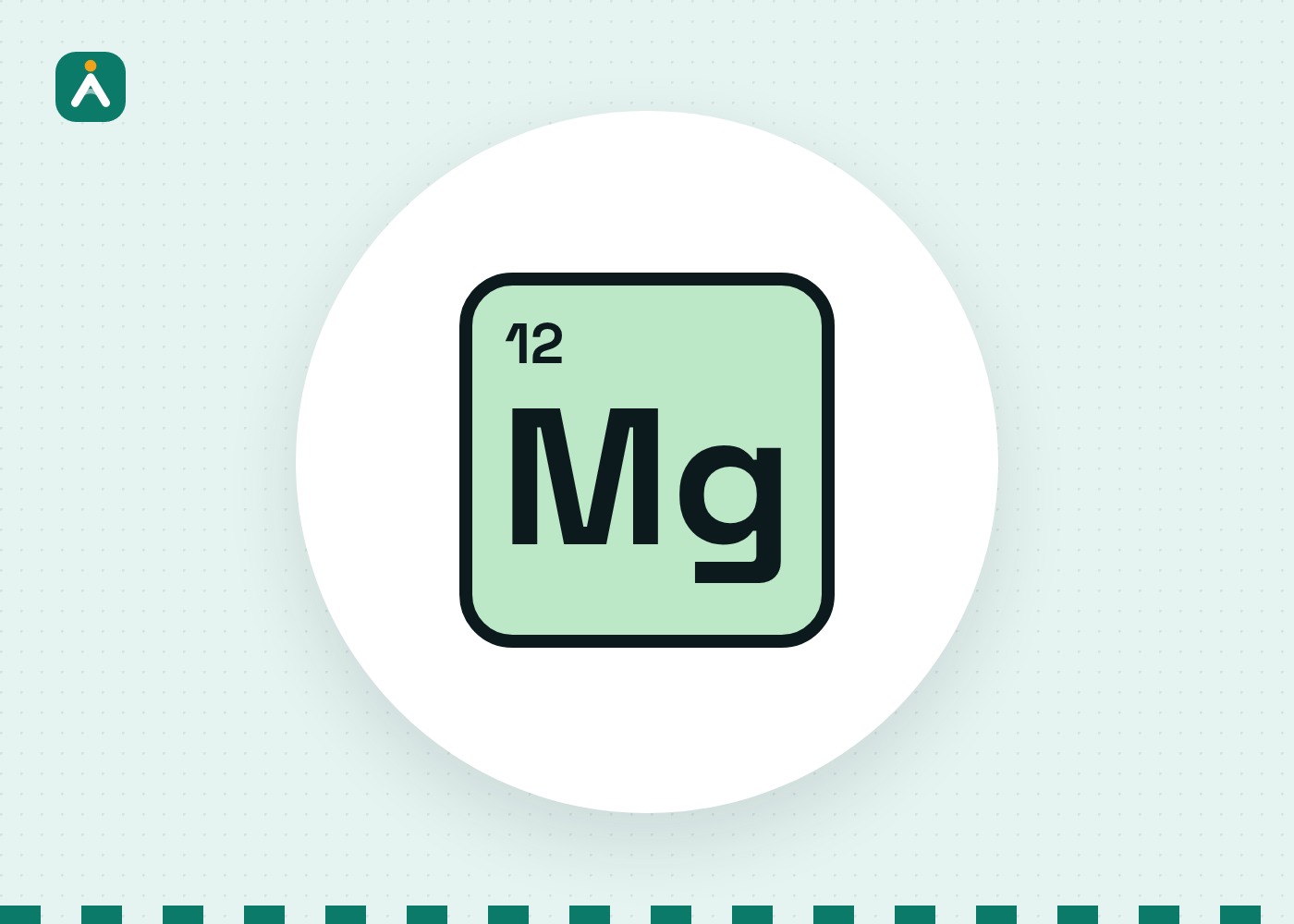

What Is Magnesium?
Magnesium is a macromineral your body needs for good health, and it takes part in over 300 enzymatic reactions. It is essential for energy production, muscle and nerve function, bone development, and heart rhythm regulation.
Magnesium appears in many foods, yet magnesium deficiency is still common because of poor dietary habits, certain medications, and chronic diseases.
Functions of Magnesium in the Body
1. Muscle and Nerve Function
Magnesium works as a natural calcium blocker, which helps muscles relax after contraction. It also supports proper nerve impulse transmission and helps reduce cramping and muscle twitches.
2. Energy Production (ATP Synthesis)
Your body needs magnesium to form ATP (adenosine triphosphate), the primary energy molecule in cells. Without it, energy metabolism is impaired.
3. Bone Health
Roughly 60% of magnesium is stored in bones. It supports bone density and structure and works with calcium and vitamin D.
4. Cardiovascular Health
Magnesium helps control heart rhythm, blood pressure, and vascular tone, which makes it important for cardiovascular function.
5. Mood and Cognitive Health
Magnesium influences neurotransmitters and may help reduce anxiety, depression, and even migraine frequency.
Recommended Daily Intake of Magnesium
| Life Stage | RDA (mg/day) |
|---|---|
| Children (1–13 years) | 80–240 mg |
| Teen Boys (14–18 years) | 410 mg |
| Teen Girls (14–18 years) | 360 mg |
| Adult Men (19–30 years) | 400 mg |
| Adult Women (19–30 years) | 310 mg |
| Adult Men (31+ years) | 420 mg |
| Adult Women (31+ years) | 320 mg |
| Pregnant Women | 350–400 mg |
| Lactating Women | 310–360 mg |
Source: National Institutes of Health (NIH)
Magnesium-Rich Foods
Best Food Sources
Leafy greens (spinach, Swiss chard)
Nuts and seeds (almonds, pumpkin seeds)
Whole grains (quinoa, brown rice)
Legumes (black beans, lentils)
Fatty fish (salmon, mackerel)
Avocados
Dark chocolate (70%+ cacao)
Note: The magnesium content of food depends on soil quality—organic and minimally processed foods usually contain higher levels.
Signs and Symptoms of Magnesium Deficiency
Deficiency (hypomagnesemia) may result from:
Poor diet
Gastrointestinal disorders (e.g., Crohn’s, celiac disease)
Alcoholism
Type 2 diabetes
Certain medications (diuretics, PPIs, antibiotics)
Common Symptoms Include:
Muscle cramps and spasms
Fatigue or weakness
Nausea or loss of appetite
Tingling or numbness
Irregular heartbeat
Irritability, anxiety, or depression
Long-term deficiency may raise the risk of osteoporosis, insulin resistance, hypertension, and cardiac arrhythmias.
Magnesium Supplementation
People commonly use magnesium supplements for:
Muscle cramps
Constipation
Migraines
PMS symptoms
Stress relief
Types of Magnesium Supplements:
Magnesium citrate: High bioavailability, often used for constipation.
Magnesium glycinate: Gentle on the stomach, good for anxiety and sleep.
Magnesium oxide: Common, but less bioavailable.
Magnesium chloride: Well-absorbed and often used topically.
Tolerable Upper Intake Level (UL) for supplemental magnesium: 350 mg/day (not including food sources).
Risks of Excess Magnesium
Magnesium from food sources does not pose a risk. Still, large supplement doses may lead to:
Diarrhea
Nausea
Abdominal cramps
Irregular heartbeat (extreme cases)
Low blood pressure
People with kidney disease must monitor magnesium intake carefully, as the body may not excrete excess efficiently.
Conclusion
Magnesium is a key mineral for human health, with essential roles in muscle function, cardiovascular regulation, nervous system stability, and energy production. The ideal approach is to meet your daily magnesium needs through a varied, whole-foods-based diet, though supplementation may be needed in some cases.
For long-term wellness, include magnesium-rich foods every day and speak with a healthcare provider before you start supplements.
References:
National Institutes of Health – Magnesium Fact Sheet for Health Professionals
Gröber U, Schmidt J, Kisters K. Magnesium in prevention and therapy. Nutrients. 2015;7(9):8199–8226. https://doi.org/10.3390/nu7095388
Rosanoff A, Dai Q, Shapses SA. Essential nutrient interactions: does low or suboptimal magnesium status interact with vitamin D and/or calcium status? Advances in Nutrition. 2016;7(1):25–43. https://doi.org/10.3945/an.115.008631
Volpe SL. Magnesium in disease prevention and overall health. Advances in Nutrition. 2013;4(3):378S–383S. https://doi.org/10.3945/an.112.003483