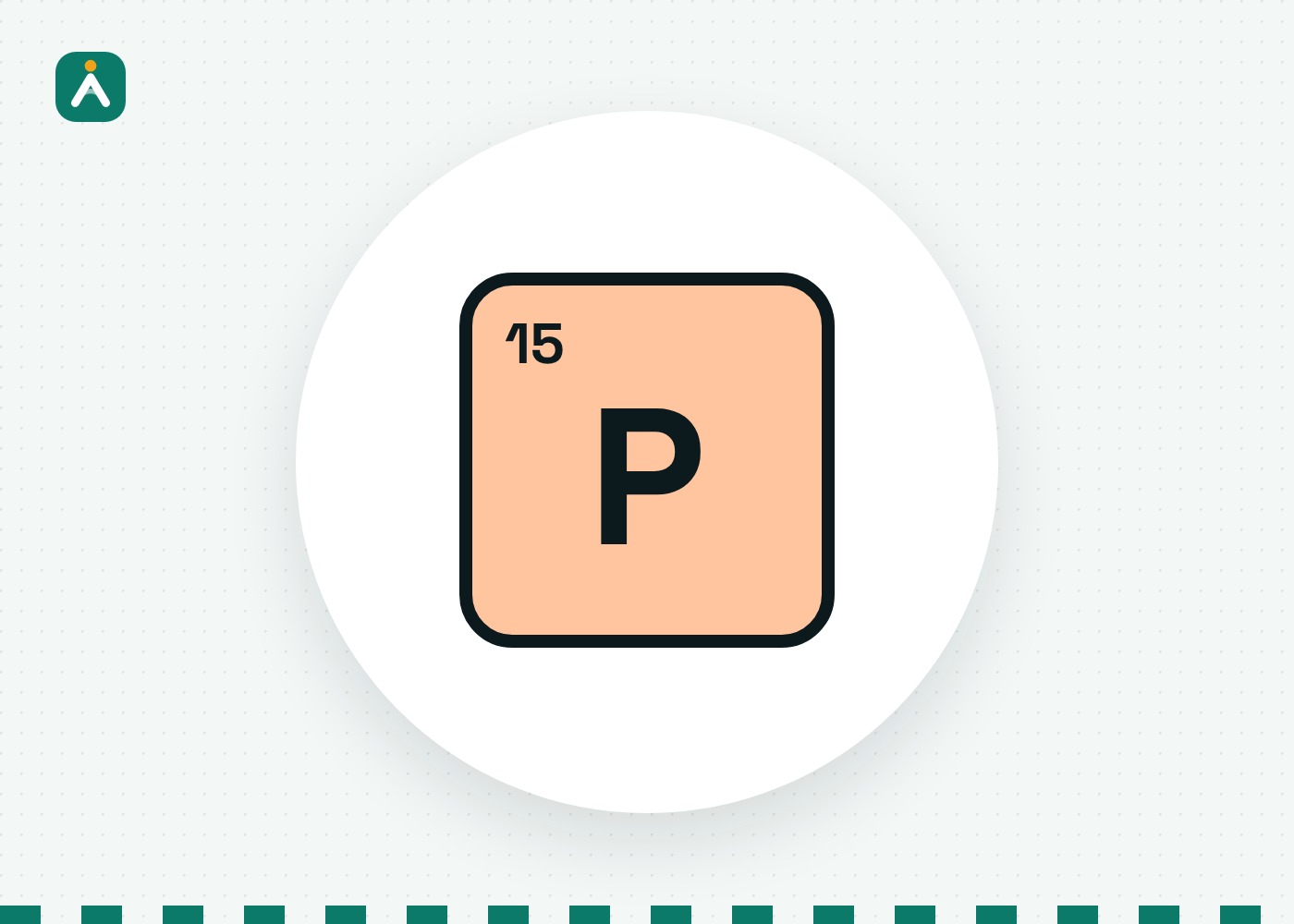

What Is Phosphorus?
Phosphorus is the body’s second most abundant mineral, with calcium coming first. About 85% of it is stored in bones and teeth. The remaining amount supports energy production, pH balance, and cellular signaling.
It also serves as a building block for DNA, RNA, ATP (adenosine triphosphate), and cell membranes, making it essential to life at the molecular level.
Functions of Phosphorus in the Body
1. Bone and Tooth Structure
Phosphorus works with calcium to create hydroxyapatite, the mineral framework that gives bones and teeth their strength. Keep calcium and phosphorus in proper balance for skeletal health.
2. Energy Production (ATP)
ATP depends on phosphorus. This molecule stores and releases energy for nearly all cellular tasks, including muscle contraction and enzyme activation.
3. Acid-Base Balance
Phosphorus functions as a buffer that helps keep blood and tissue pH in a normal range, especially during intense exercise.
4. Cell Membrane Integrity
Phosphorus is part of phospholipids, so it helps maintain the structure and function of every cell membrane in the body.
5. Nucleic Acid Synthesis
Phosphorus is essential for DNA and RNA and plays a major role in gene expression, cell repair, and replication.
Recommended Daily Intake of Phosphorus
| Life Stage | Recommended Intake (RDA) |
|---|---|
| Children (1–8 years) | 460–500 mg/day |
| Adolescents (9–18 years) | 1,250 mg/day |
| Adults (19 years and older) | 700 mg/day |
| Pregnant/Lactating Women | 700–1,250 mg/day |
Source: Institute of Medicine (IOM)
Dietary Sources of Phosphorus
You can find phosphorus in many foods:
Animal-Based Sources (High Bioavailability)
Meat (chicken, beef, turkey)
Fish (salmon, tuna, sardines)
Eggs
Dairy products (milk, cheese, yogurt)
Plant-Based Sources
Legumes (lentils, chickpeas, black beans)
Nuts and seeds (pumpkin seeds, sunflower seeds)
Whole grains (brown rice, oats, quinoa)
Note: In plant foods, phosphorus is mostly present as phytate, which is less bioavailable unless the food is soaked, sprouted, or fermented.
Phosphorus Deficiency: Causes and Symptoms
Causes:
Malnutrition
Chronic alcoholism
Long-term use of antacids or diuretics
Uncontrolled diabetes
Refeeding syndrome in malnourished individuals
Symptoms:
Muscle weakness
Fatigue
Bone pain or fragility
Numbness or tingling
Weak immune response
Irregular breathing
In severe cases, deficiency may cause rhabdomyolysis (muscle breakdown), osteomalacia, or reduced cardiac and neurological function.
Risks of Excess Phosphorus (Hyperphosphatemia)
Diet alone rarely causes this, but excessive phosphorus intake—often from processed foods or phosphate additives—can be harmful, especially for people with kidney disease.
Potential Risks Include:
Impaired calcium absorption
Increased risk of osteoporosis
Vascular calcification (hardening of arteries)
Hormonal imbalance affecting bone remodeling (via PTH)
The tolerable upper intake level (UL) for adults is 4,000 mg/day, though people with compromised kidney function may require significantly lower intakes.
Balancing Phosphorus and Calcium
To support bone health and metabolic function, calcium and phosphorus should be eaten in appropriate ratios (approximately 1:1). When phosphorus is high and calcium is low, calcium leaching from bones can weaken the skeleton over time.
Who May Need Phosphorus Supplements?
Phosphorus supplements are rarely needed unless prescribed for:
Severe malnutrition
Genetic phosphate metabolism disorders
Very restrictive or low-protein diets
Medical refeeding protocols
Avoid taking too much supplemental phosphorus without medical supervision.
Conclusion
Phosphorus is an essential mineral for bone integrity, cellular energy, and metabolic balance. Deficiency is uncommon in healthy people who eat a balanced diet, but too much phosphorus—especially from phosphate additives—can create long-term health risks. Choose whole, minimally processed foods and get enough calcium to support phosphorus balance and overall health.
References:
Institute of Medicine (US). Dietary Reference Intakes for Calcium and Vitamin D. National Academies Press; 2011.
Calvo MS, Uribarri J. Contributions to total phosphorus intake: all sources considered. Seminars in Dialysis. 2013;26(1):54-61. https://doi.org/10.1111/sdi.12042
Razzaque MS. Phosphate toxicity: new insights into an old problem. Clinical Science. 2011;120(3):91-97.
Schmitt CP, Mehls O. The impact of phosphorus on the skeleton in chronic kidney disease. Pediatric Nephrology. 2005;20(4):462–470.