
What Is Lysine?
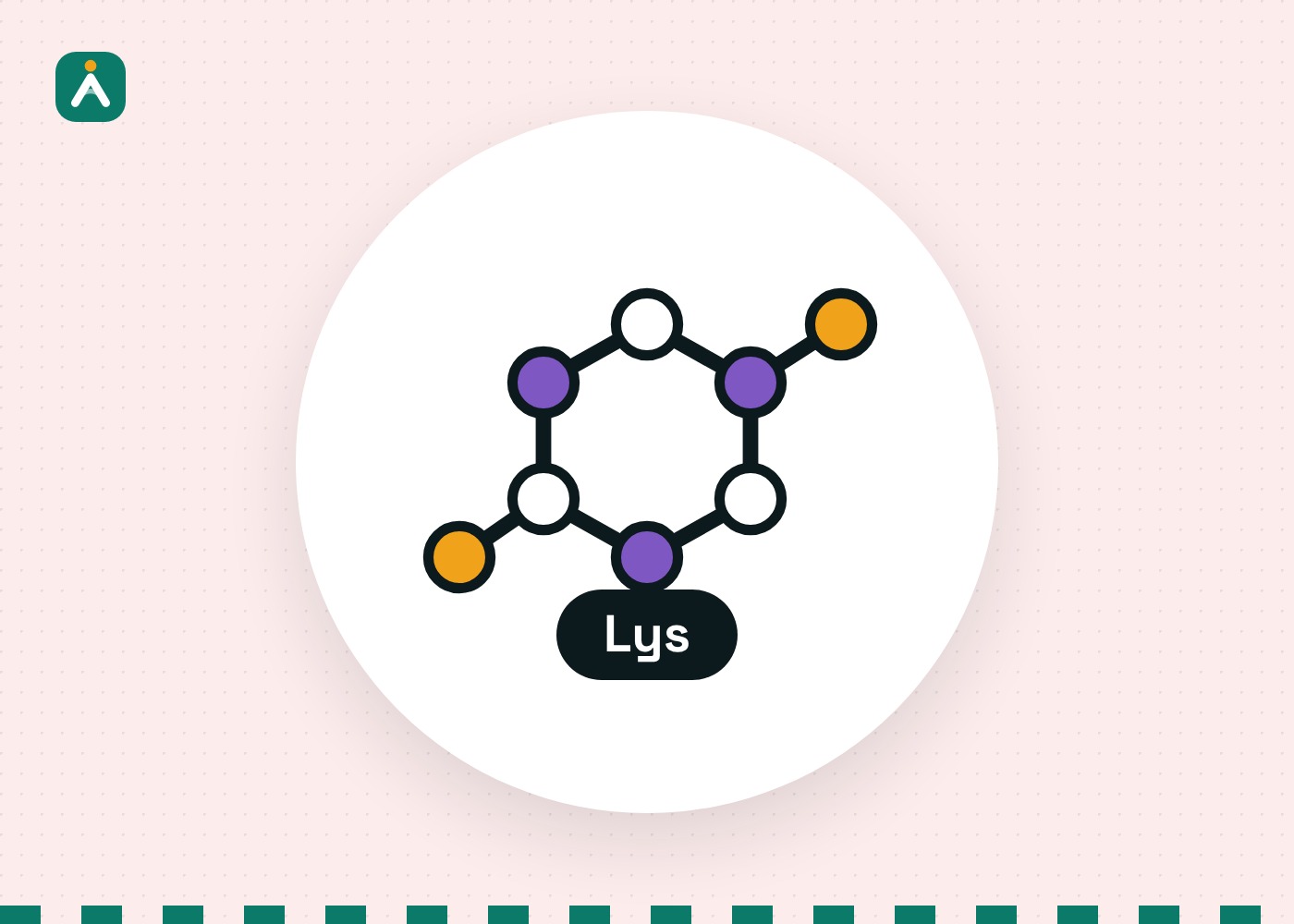
Lysine (L-lysine) is one of the nine essential amino acids. The human body cannot make it, so you must get it from food. It is a basic (positively charged) amino acid that helps with protein synthesis, tissue repair, collagen formation, and calcium absorption.
Compared with branched-chain amino acids, lysine has a bigger role in immunity, connective tissue health, and even the inhibition of certain viral infections, especially the herpes simplex virus (HSV).
Functions of Lysine in the Body
1. Supports Collagen and Tissue Repair
Lysine is required to build collagen, the structural protein found in skin, tendons, ligaments, and cartilage. It also works with vitamin C to support wound healing and connective tissue strength (Reddy & Enwemeka, 1996).
2. Enhances Calcium Absorption and Bone Health
Lysine increases intestinal absorption of calcium and lowers how much is lost in urine, which may help maintain bone density and prevent osteoporosis (Civitelli et al., 1992).
3. Boosts Immune Function
Lysine supports the production of antibodies and helps immune cells such as macrophages and lymphocytes do their job. It aids defense against infections and may reduce the duration and frequency of cold sores caused by HSV-1 (Griffith et al., 1987).
4. Assists in Hormone and Enzyme Production
Lysine helps the body make hormones, enzymes, and antibodies. It also plays a part in nitrogen balance and supports the structure of blood vessels and organ tissues.
5. Promotes Muscle Growth and Recovery
Because it is involved in protein synthesis, lysine supports muscle repair after exercise or injury. It is important for children’s growth and for preserving lean muscle mass in adults.
Benefits of Lysine
Supports collagen production for skin, bones, and joints
Helps with calcium absorption and bone strength
Bolsters the immune system and may suppress HSV outbreaks
Supports muscle growth and tissue repair
May help manage anxiety by interacting with serotonin receptors (Smriga et al., 2004)
Lysine Deficiency: Signs and Risk Factors
Who Is at Risk?
Vegans/vegetarians consuming low-lysine grains (e.g., corn, wheat) without balancing legumes
People with poor protein intake
Individuals with malabsorption syndromes
Those under chronic stress or injury
Deficiency Symptoms May Include:
Fatigue or irritability
Poor appetite
Nausea, dizziness
Delayed wound healing
Hair loss
Anemia
Weakened immunity
Increased frequency of cold sores (HSV outbreaks)
Daily Lysine Requirements
According to the World Health Organization (WHO):
Adults: 30 mg of lysine per kg of body weight per day
For a 70 kg adult: ~2,100 mg/day
Athletes, children, pregnant and breastfeeding individuals may require higher amounts.
Top Food Sources of Lysine
Lysine is found in high amounts in animal proteins and certain plant-based foods. Unlike some other essential amino acids, lysine is often low in cereal grains, which makes it a limiting amino acid in vegan diets if you do not plan meals carefully.
High-Lysine Animal-Based Foods:
| Food | Serving | Lysine Content |
|---|---|---|
| Chicken breast | 3 oz (85g) | ~2,500 mg |
| Eggs | 2 large | ~900 mg |
| Salmon | 3 oz | ~2,200 mg |
| Greek yogurt | 1 cup | ~1,500 mg |
| Parmesan cheese | 1 oz | ~750 mg |
High-Lysine Plant-Based Foods:
| Food | Serving | Lysine Content |
|---|---|---|
| Lentils (cooked) | 1 cup | ~1,250 mg |
| Quinoa (cooked) | 1 cup | ~450 mg |
| Tofu | ½ cup | ~1,100 mg |
| Black beans | 1 cup | ~1,200 mg |
| Pumpkin seeds | 1 oz | ~400 mg |
To get the most lysine from a plant-based diet, include legumes, tofu, soy, and quinoa often.
Lysine Supplementation
L-lysine supplements are used for:
Preventing and treating cold sores (HSV-1/HSV-2)
Supporting recovery and wound healing
Enhancing muscle repair in athletes
Managing anxiety and stress in select populations
Typical Dosage:
General immune and recovery support: 500–1,000 mg daily
HSV suppression: 1,000–3,000 mg per day (divided doses) (Griffith et al., 1987)
Safety:
Lysine is considered safe for most people. High doses (over 3,000 mg/day) should only be used under medical supervision. Rare side effects include nausea, stomach pain, or diarrhea.
Research and Clinical Applications
Herpes Virus Suppression: Research indicates that L-lysine can reduce the frequency, duration, and severity of herpes simplex virus outbreaks, especially when used preventatively (Griffith et al., 1987).
Bone Health: Lysine supports calcium retention and may improve bone strength in postmenopausal women (Civitelli et al., 1992).
Anxiety Modulation: Lysine affects serotonin receptors and may help lower cortisol while easing symptoms of stress and anxiety (Smriga et al., 2004).
Conclusion
Lysine is an important component of proteins and connective tissues, and it plays a key role in immune strength, bone health, and tissue repair. It may be especially helpful for muscle recovery, controlling herpes outbreaks, and reducing stress levels.
Getting enough through a diet that includes high-quality proteins, or using supplementation when necessary, can help you meet your lysine needs for health maintenance, recovery, or optimal performance.
References
Griffith, R. S., Norins, A. L., & Kagan, C. (1987). A multicenter study of lysine therapy in herpes simplex infection. Dermatologica, 175(4), 183–190.
Civitelli, R., et al. (1992). Lysine and arginine modulate intestinal calcium absorption in humans. Nutrition, 8(6), 400–405.
Reddy, G. K., & Enwemeka, C. S. (1996). A simplified method for the analysis of hydroxyproline in biological tissues. Clinical Biochemistry, 29(3), 225–229.
Smriga, M., et al. (2004). Lysine fortification reduces anxiety and stress in a randomized, double-blind, placebo-controlled study in humans. Proceedings of the National Academy of Sciences, 101(22), 8285–8288.