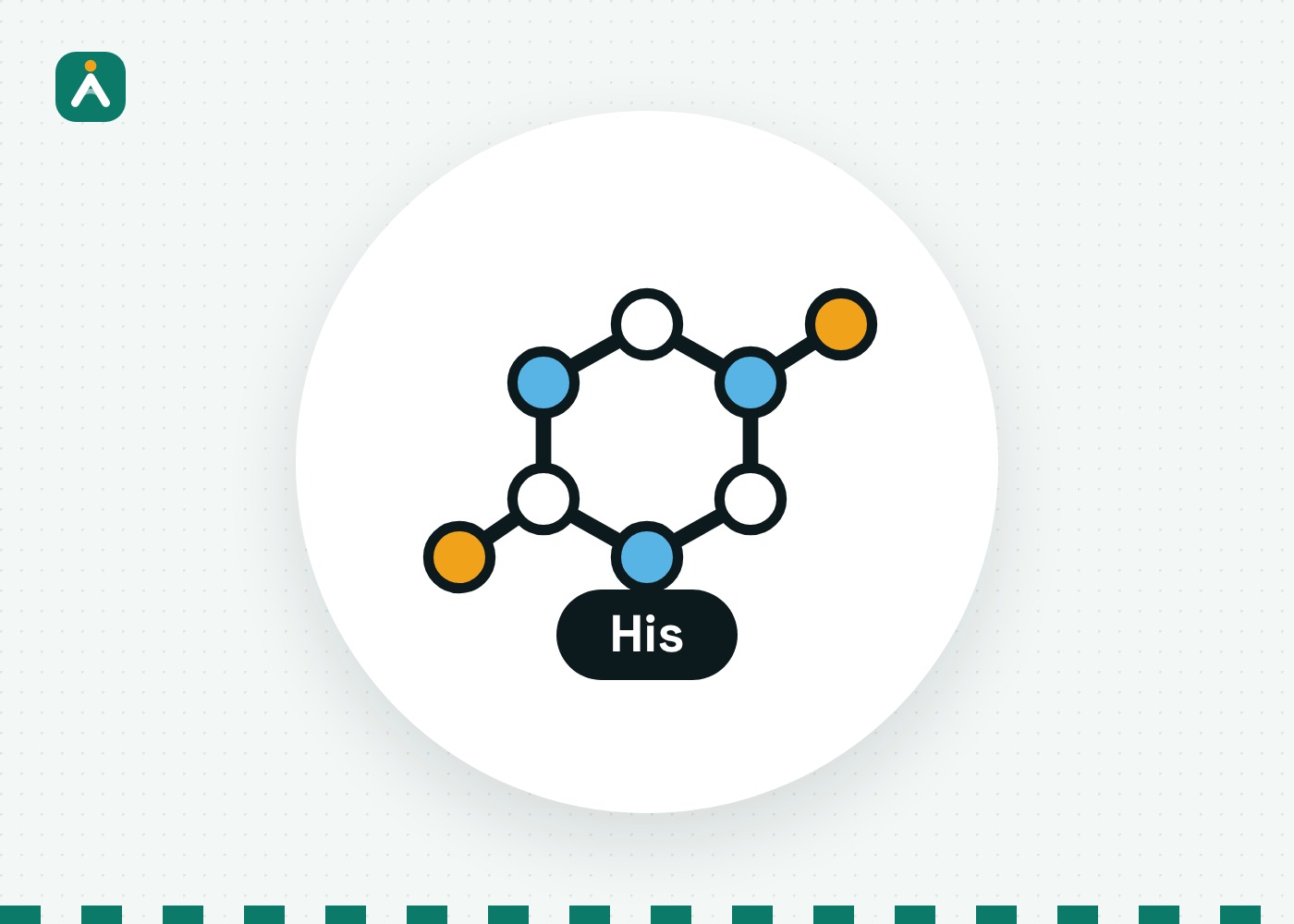

What Is Histidine?
Histidine is one of the nine essential amino acids. Your body cannot make it, so you need to get it from food. It supports several key processes, including immune response, tissue repair, growth, and neurotransmitter regulation.
It may not get as much attention as amino acids such as leucine or tryptophan, but histidine is indispensable for both adults and children—especially during periods of growth, recovery, or immune stress.
Biological Functions of Histidine
1. Histamine Production
Histidine’s main jobs include serving as a precursor to histamine, a biologically active compound involved in:
Allergic reactions
Gastric acid secretion
Neurotransmission
Inflammatory response
The enzyme histidine decarboxylase turns histidine into histamine, especially in mast cells and basophils during allergic or immune responses (Maintz & Novak, 2007).
2. pH Regulation
Histidine contains an imidazole side chain that can accept or donate protons. That makes it an effective buffer for maintaining acid-base balance in tissues, especially in hemoglobin and intracellular fluid.
3. Myelin and Nerve Function
Histidine is necessary for the formation and maintenance of myelin sheaths, which insulate nerve cells and help signals travel properly. If you are deficient, nerve function and cognitive performance may suffer.
4. Hemoglobin Structure and Oxygen Binding
Histidine residues are important for hemoglobin’s ability to bind oxygen efficiently. They help stabilize the heme group and influence oxygen affinity, which affects oxygen delivery to tissues.
5. Wound Healing and Tissue Growth
Histidine helps with cellular repair and regeneration, so it matters especially after injury, surgery, or intense physical training. It is also essential during the rapid growth phases of infancy and adolescence.
Health Benefits of Histidine
Supports Immune Function: Through histamine synthesis and antioxidant properties
Aids in Digestion: Via histamine’s role in stimulating gastric acid secretion
Promotes Mental Clarity: By influencing neurotransmitter balance and myelin production
Helps Manage Inflammatory Conditions: As a precursor to histamine, it modulates inflammation
May Assist in Metabolic Disorders: Some research suggests benefits for anemia and metabolic syndrome (Kawasaki et al., 2012)
Signs and Symptoms of Histidine Deficiency
Deficiency is uncommon in healthy adults, but it may occur in people with:
Chronic kidney disease
Malabsorption syndromes
Anorexia or restrictive diets
Severe stress or illness
Deficiency symptoms may include:
Fatigue
Poor wound healing
Anemia
Reduced immune response
Mental confusion or depression
Dry or scaly skin
In infants and young children, too little histidine can interfere with growth and development.
Daily Requirements
Histidine needs change based on age, sex, and life stage.
According to the World Health Organization (WHO), the estimated daily requirement for adults is:
10 mg/kg of body weight per day
For a 70 kg adult, this equates to about 700 mg/day.
Athletes, individuals with chronic illness, and people recovering from trauma or surgery may have higher needs.
Best Dietary Sources of Histidine
Histidine is found in many protein-rich foods, especially animal-based foods.
Animal-Based Sources:
Chicken breast (1 cup): ~1,200 mg
Tuna (3 oz): ~1,000 mg
Eggs (2 large): ~400 mg
Ground beef (3 oz): ~900 mg
Milk (1 cup): ~300 mg
Plant-Based Sources:
Soybeans (1 cup cooked): ~1,000 mg
Lentils (1 cup cooked): ~450 mg
Quinoa (1 cup cooked): ~350 mg
Pumpkin seeds (1 oz): ~270 mg
Peanuts (1 oz): ~250 mg
Vegetarians and vegans can meet their histidine needs by eating a variety of plant-based proteins across meals.
Clinical Applications and Research
Recent studies suggest that histidine supplementation may:
Improve metabolic profiles in overweight individuals (Kawasaki et al., 2012)
Act as an antioxidant and anti-inflammatory agent (Peterson et al., 2010)
Support erythropoiesis in anemic patients, particularly those with chronic kidney disease (Fouque et al., 2006)
However, more controlled studies are needed to confirm these therapeutic roles.
Safety and Supplementation
Histidine supplements are generally well-tolerated at standard doses (up to 4 grams/day). Excessive intake may increase histamine levels, potentially causing:
Headaches
Nausea
Flushing
Aggravation of allergies
Always consult a healthcare provider before using histidine supplements, especially if you have a histamine intolerance or autoimmune condition.
Conclusion
Histidine is more than a protein building block. It is a critical amino acid that helps support immune function, tissue repair, digestion, and brain health. Most people can meet their needs with a balanced diet, but some groups may need to watch or increase their intake.
Keeping histidine intake in a healthy range helps support cellular health, cognitive clarity, and immune resilience. That makes it an important nutrient throughout life.
References
World Health Organization. (2007). Protein and Amino Acid Requirements in Human Nutrition. WHO Technical Report Series 935.
Maintz, L., & Novak, N. (2007). Histamine and histamine intolerance. The American Journal of Clinical Nutrition, 85(5), 1185–1196.
Kawasaki, T., et al. (2012). Effects of histidine on obesity: A randomized controlled trial. Nutrition Journal, 11(1), 86.
Peterson, J. W., et al. (2010). Antioxidant properties of histidine. Free Radical Biology and Medicine, 48(6), 822–829.
Fouque, D., et al. (2006). Nutritional management of chronic kidney disease. Kidney International, 70(3), 446–457.